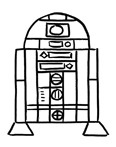
 Cartoonist Mark Anderson has a neat tutorial that shows you how to draw a cartoon version of R2D2.
Tuesday, May 1, 2012
How to draw a cartoon R2D2
How to draw a cartoon R2D2:
Cartoonist Mark Anderson has a neat tutorial that shows you how to draw a cartoon version of R2D2.


Cartoonist Mark Anderson has a neat tutorial that shows you how to draw a cartoon version of R2D2. 

Tree stumps converted to sculpture
Tree stumps converted to sculpture:

Meet proto-hipster LeRoy Jackson (Airman 2/C), father of the art movement that lead to yarn-bombing, lego-building repair, space invader tile mosaics, and other forms of guerrilla urban art.
How to use tree stumps


Meet proto-hipster LeRoy Jackson (Airman 2/C), father of the art movement that lead to yarn-bombing, lego-building repair, space invader tile mosaics, and other forms of guerrilla urban art.
How to use tree stumps
3D printed electromechanical computer
3D printed electromechanical computer:
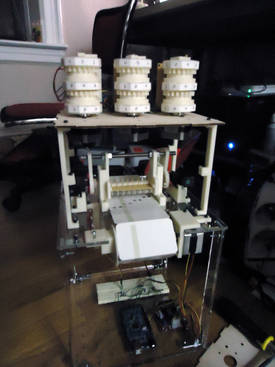
This 3D printed electromechanical punchcard reader is but one component of an ambitious project to build a whole, functional 3D printed computer. It's the brainchild of Chris Fenton from the NYC Resistor hackspace in Brooklyn.
3D Printed Electromechanical Computer


This 3D printed electromechanical punchcard reader is but one component of an ambitious project to build a whole, functional 3D printed computer. It's the brainchild of Chris Fenton from the NYC Resistor hackspace in Brooklyn.
3D Printed Electromechanical Computer
Cubify's 3D printer up for pre-order, wants to make you make trinkets
Cubify's 3D printer up for pre-order, wants to make you make trinkets:
 3D systems trumpeted its forthcoming Cube printer back at CES, and it looks like its easy-on-the-eye curves are nearly ready for your earnest crafting. The good part is a lack of them. If you've assembled a more typical printer in the last ten years, you should be able to put these associated pieces together. It's a sharp contrast to plenty of 3D printers that more closely resemble an engineer's tantrum. The printer is priced up at $1,299, so it's not the cheapest, but we are promised a pretty concrete May 25th release date. Hit up the source to place your order, alongside some extra color cartridges. How would you make those turtleshell racers without some blue and red?
 Tech.li |
 Cubify | Email this | Comments
Cubify's 3D printer up for pre-order, wants to make you make trinkets originally appeared on Engadget on Tue, 01 May 2012 08:14:00 EDT. Please see our terms for use of feeds.
Permalink Tech.li | Cubify | Email this | Comments
Insert Coin: Genie turns any camera into a world-class time lapse rig
Insert Coin: Genie turns any camera into a world-class time lapse rig:
In Insert Coin, we look at an exciting new tech project that requires funding before it can hit production. If you'd like to pitch a project, please send us a tip with "Insert Coin" as the subject line.
 New Zealand-based designer Chris Thomson and filmmaker Ben Ryan found that motion-control time lapse gear too expensive, too complicated and too bulky. So they set about building the Genie, a box that moves your camera around under its own power. Designed to be cheap(er than the competition) and user-friendly, the device will let you choose from a variety of presets or build your own to turn and position the camera. It will also draw itself along a guide rope, either on a dolly track or cable-cam for stunning landscape photography. It's reached $42,542 of its $150,000 goal and if successful, each unit will cost $1,000.
Continue reading Insert Coin: Genie turns any camera into a world-class time lapse rig
Kickstarter | Email this | Comments
In Insert Coin, we look at an exciting new tech project that requires funding before it can hit production. If you'd like to pitch a project, please send us a tip with "Insert Coin" as the subject line.
Continue reading Insert Coin: Genie turns any camera into a world-class time lapse rig
Insert Coin: Genie turns any camera into a world-class time lapse rig originally appeared on Engadget on Tue, 01 May 2012 08:01:00 EDT. Please see our terms for use of feeds.
Permalink | Kickstarter | Email this | Comments
MySites for Chrome Transforms the New Tab Page into a Metro-Inspired Speed Dialer [Chrome Extensions]
MySites for Chrome Transforms the New Tab Page into a Metro-Inspired Speed Dialer [Chrome Extensions]:

Chrome: If Chrome's built-in new tab page looks a little plain to you, or if you like the look of Microsoft's Metro UI, MySites is a Chrome extension that changes the new tab page into a start page decorated with a web search bar and colorful tiles that you can click to go straight to your most commonly accessed sites and favorites. More »


Repurpose a Soda Bottle Into a DIY Irrigation System [Gardening]
Repurpose a Soda Bottle Into a DIY Irrigation System [Gardening]:

If you want to go out of town without your garden plants wilting from neglect, you can easily turn plastic 2-liter soda bottles into a makeshift irrigation system. More »


Cut Bread Loaves Upside Down to Avoid Squishing [Food Hacks]
Cut Bread Loaves Upside Down to Avoid Squishing [Food Hacks]:

Next time you're cutting a loaf of unsliced bread turn that loaf over and start the cut from the bottom—you'll have an easier time cutting as the bottom is softer than the crust and since you'll cut easier you can avoid squishing the bread. More »


Researchers make an RGB laser with a regular laser and quantum dots
Researchers make an RGB laser with a regular laser and quantum dots:
 The problem with lasers is, they tend to generate just a single color or light.To get more than one hue requires actually combining more than one type of laser to produce red, green and blue. But researchers at Brown University have figured out a solution to creating small RGB lasers by using colloidal quantum dots, or CQDs. The idea of leveraging the properties of the thin film isn't new, but past attempts to use CQDs in semiconductor lasers have failed because the necessary energy tends to wind up as heat instead of light. The work around scientists found was to excite the various dot sizes with a laser then filter out original light source. Unfortuneately, the solution is far from practical for use in commercial products, but it does represent a milestone in the march towards a single-material multi-wavelength laser. For more details check out the source link.
Ars Technica | Nature, Brown University | Email this | Comments
Researchers make an RGB laser with a regular laser and quantum dots originally appeared on Engadget on Tue, 01 May 2012 06:06:00 EDT. Please see our terms for use of feeds.
Permalink Ars Technica | Nature, Brown University | Email this | Comments
Subscribe to:
Posts (Atom)